
Your Customers Stopped Googling - Here's Where They're Searching Now
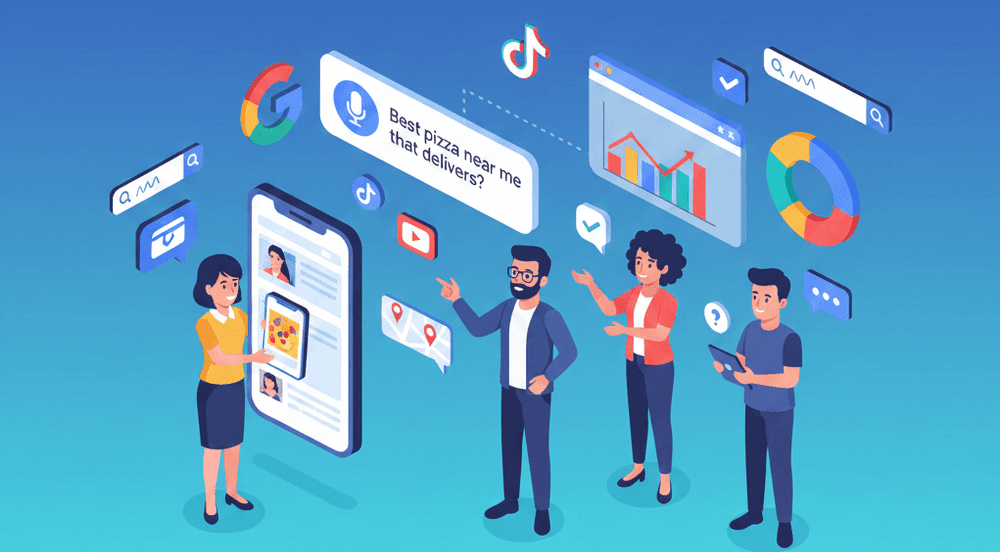
Your target audience just changed how they find businesses like yours. In October 2024, 40% of Gen Z reported using TikTok as their primary search engine for local recommendations, not Google. Meanwhile, voice search adoption reached 8 billion devices globally, fundamentally shifting how people ask questions about products and services. If your SEO strategy still revolves around traditional keyword stuffing and desktop search, you're missing where the conversation is actually happening.
Voice Search Killed Your Keyword Strategy
Traditional searches used to look like "pizza delivery Brooklyn." Voice searches sound like conversations: "What's the best pizza place that delivers to my apartment in Williamsburg?"
This isn't just a format change, it's a complete rethink of search intent. Voice searches are three times more likely to be location-based than text queries, which means local businesses have a massive opportunity. But only if they optimize for how people actually talk.
The technical reason matters: Google's speech recognition now hits 95% accuracy. When someone asks their phone a question while driving, walking, or cooking, the results need to match natural language patterns. Your content needs to sound like an answer, not a keyword list.
Social Platforms Became Search Engines While You Weren't Looking
Something bigger happened to search behavior. TikTok's engagement rate jumped 49% year-over-year to 3.70%, but that's not just about entertainment—it's about discovery. Younger consumers now search Instagram for restaurant reviews, YouTube for product tutorials, and TikTok for local recommendations.
Most businesses get this wrong. They treat social media like advertising billboards instead of search engines. The difference? Search engines reward helpful answers. Social platforms reward authentic, conversational content that actually solves problems.
The 5-Step Voice and Social Search Optimization Checklist
Step 1: Audit Your Question-Answer Content
Look at your current content through this lens: Does it answer the questions your customers actually ask? Transform your existing content by reframing it as natural questions.
Instead of: "Nonprofit Fundraising Tips"
Write: "What's the Best Way to Raise Money for My Community Organization?"
Step 2: Create Platform-Specific Content Clusters
Each platform searches differently. For TikTok, create short how-to videos using hashtags like #SmallBusinessTips. For Instagram, use carousel posts that answer common questions with strong visual elements. For YouTube, develop longer tutorial content with descriptive titles and transcripts.
Step 3: Implement Featured Snippet Optimization
Structure your website content to capture featured snippets, those answer boxes that voice assistants read aloud. Use clear headings, bullet points, and direct answers in the first 40-50 words of your paragraphs.
Step 4: Optimize for Local Voice Queries
Voice searches are heavily local. Make sure your Google My Business profile includes conversational phrases people actually use. If you're a dentist, include content about "emergency tooth pain near me" or "same-day dental appointments in [your city]."
Step 5: Test Your Voice Search Results
Actually test how your content performs in voice search. Ask Siri, Google Assistant, or Alexa questions your customers would ask. If your business doesn't come up in the first few results, your optimization needs work.
What To Do About This
Start with one platform where your customers are already active. If you're B2B, focus on LinkedIn and YouTube search optimization. If you're local retail, prioritize Google voice search and Instagram discovery.
Create content that passes the "conversation test", would you naturally say these words to a friend asking for advice? If not, rewrite it. Both voice assistants and social algorithms now prioritize natural language over keyword density.
Track where your traffic actually comes from. If you're still measuring success only by Google Analytics, you're missing the bigger picture of how customers discover your business across platforms.
Bottom Line:
Search behavior shifted faster than most businesses adapted. Voice search and social discovery aren't future trends, they're how your customers find businesses right now. The companies that understand this and optimize accordingly will capture market share from those still fighting yesterday's SEO battles.
What questions are your potential customers asking out loud about your industry?