
Google's January 2026 Update Just Changed the SEO Game
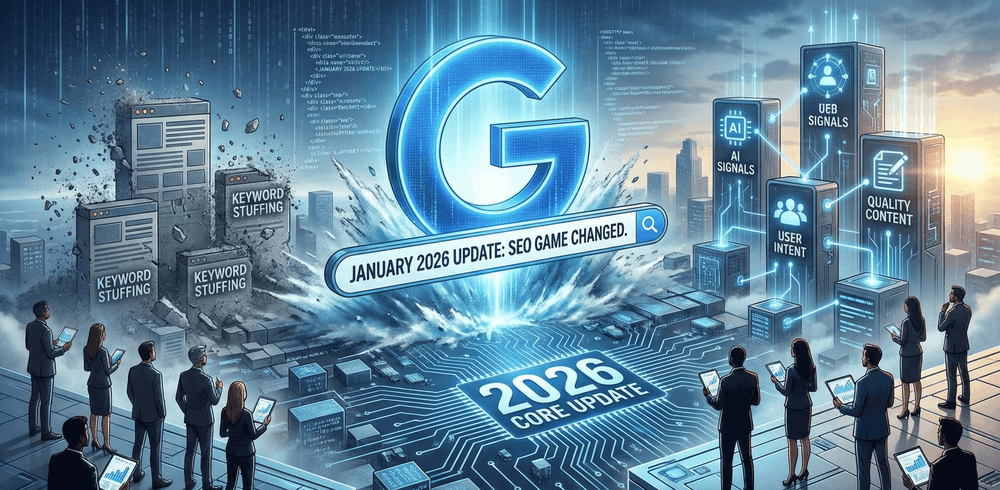
Something shifted in January 2026 that most business owners missed. While everyone was focused on holiday recovery, Google quietly rolled out what SEO professionals are calling the "Authenticity Update", and it's already separating the winners from the losers in search results.
If you've been churning out generic blog posts or leaning heavily on AI-generated content without adding real value, your rankings probably took a hit around January 6th. But if you've been building genuine expertise and first-hand experience into your content? You might have just gained a major competitive advantage.
Your Generic Content Strategy Just Became Obsolete
Google's January 2026 core update isn't playing around with thin content anymore. According to Search Engine Roundtable's January analysis, this update specifically targets authenticity and first-hand experience in ways we haven't seen before.
What does this actually mean? Google is now actively rewarding content that shows clear evidence you know what you're talking about, and punishing content that reads like it came from a template or AI prompt.
I'm seeing sites lose 30-40% of their traffic if they relied heavily on:
- Mass-produced "What is X?" articles
- Affiliate content with no original testing
- AI-generated posts with minimal human editing
- Generic service pages that could describe any business
Meanwhile, businesses that documented their real processes, shared specific results, and included original photos or data are climbing the rankings. The difference isn't subtle, it's dramatic.
Google Now Judges Your Entire Topic Coverage, Not Just Individual Pages
Here's where January 2026 gets interesting for business owners. Google isn't just looking at whether your individual blog post answers a question anymore. It's evaluating how well your entire website covers the topics you claim to be expert in.
This shift toward "topical authority" means a single great article about roofing won't cut it if that's your only roofing content. Google wants to see:
- Comprehensive coverage of your main services
- Connected content clusters that link related topics
- Updated, maintained resources that reflect current information
- Consistent expertise from the same author or business
A local HVAC company I work with saw their rankings jump 40% after reorganizing their blog into clear topic clusters, furnace repair, AC maintenance, energy efficiency, emergency services, instead of random one-off posts. Each cluster had 5-8 interconnected articles that built on each other.
The message is clear: become THE resource on your specialty, not just another voice in the crowd.
AI Content Isn't Banned, But Google Got Much Smarter About Spotting Low-Quality AI
Let's address the elephant in the room. Google didn't ban AI content in January 2026, but their ability to identify low-effort AI content took a major leap forward.
Sites getting hit hardest are those publishing mass-produced AI articles with minimal human oversight. But here's what's working: using AI as a starting point, then adding substantial human expertise.
Successful businesses are now:
- Using AI for outlines and first drafts only
- Adding specific examples from their own experience
- Including original photos, screenshots, or data
- Having subject matter experts heavily edit and expand AI-generated content
One manufacturing client saw their technical guides start ranking again after they had engineers add real troubleshooting examples and industry-specific details to what started as AI-drafted content. The key? You couldn't tell which parts were AI-assisted because the final result was genuinely helpful.
Local Businesses Just Got a Major Opportunity
January 2026 also strengthened local SEO signals in ways that favor small businesses over generic corporate content. If you serve specific geographic areas, this update is actually great news.
Google is now giving extra weight to:
- Optimized Google Business Profiles with complete information
- Location-specific content that addresses local conditions
- Consistent business information across directories
- First-hand knowledge of local markets
A roofing contractor started dominating local search after creating guides specifically about roof problems in the drpvific area including seasonal issues, local building codes, and neighborhood-specific concerns. This beat generic "roof repair" content every time because it showed real local expertise.
For service businesses, this is your chance to outrank bigger competitors who rely on generic, nationally-focused content.
What To Do About This Right Now
Don't panic, but don't wait either. Here's your action plan for adapting to January 2026:
First, audit your recent performance. Check Google Search Console comparing the week of January 6-13, 2026 to the previous month. Look for patterns in which content lost traffic, it's probably your most generic or AI-heavy pages.
Second, prove your expertise visibly. Add author bios, "how we know this" sections, original photos, specific examples from your work, and concrete data wherever possible. Show, don't just tell.
Third, build topic clusters. Pick your 3-4 main service areas and create comprehensive coverage around each. Don't just write random blog posts, build interconnected resources that establish you as the local authority.
Fourth, upgrade your AI workflow. If you use AI for content, make sure humans are adding significant value, industry insights, local context, specific examples, original analysis. The final result should be genuinely more helpful than what's already ranking.
The Bottom Line
Google's January 2026 update isn't just another algorithm change, it's a clear signal that the era of generic, template-driven content is ending. Businesses that adapt by showcasing real expertise and building genuine topical authority will dominate their local markets.
The businesses still trying to game the system with thin content and minimal AI oversight? They're about to find out how expensive it is to ignore authenticity in search.
Are you ready to prove you actually know what you're talking about?