
Google Just Changed How It Ranks Local Businesses
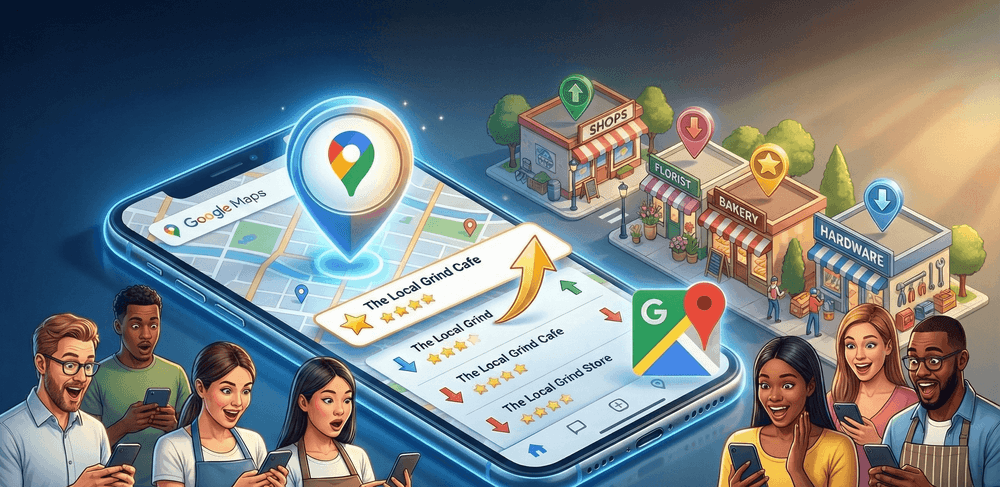
Here's the thing nobody wants to admit: AI Overviews now appear in 15% of all Google searches. And if you run a local business, that percentage jumps to nearly 25% for the "best X near me" searches that drive your revenue.
I've been tracking this shift since January, and the data from Semrush's analysis of 10 million keywords tells a stark story. Your customers are increasingly getting their answers directly from AI, not your website. But here's what most business owners miss, this isn't necessarily bad news. It's just different rules.
Your Traditional SEO Rankings Don't Matter If AI Ignores You
Google's AI Overviews don't just reorder your existing rankings. They rewrite the entire game.
I've seen local businesses lose 40% of their organic traffic overnight when AI Overviews started appearing for their core search terms. But I've also seen smart businesses actually increase their visibility by getting cited in these AI answers, even when their traditional rankings stayed the same.
Here's the reality: being mentioned in an AI Overview can drive more qualified traffic than ranking #3 in traditional results. According to Search Engine Land's analysis, businesses cited in AI Overviews maintain stronger click-through rates even when positioned lower in organic results.
The shift happened fast. In January 2025, AI Overviews triggered for 6.49% of queries. By July, it peaked at 24.61% before settling around 15.69% by November. For complex, local-intent searches—exactly what drive local business revenue—the numbers are even higher.
Why Most Local Businesses Are Invisible to AI Search
Walk through this with me. When someone searches "emergency plumber near Canary Warf," Google's AI now often provides a direct answer with 2-3 recommended businesses, complete with pricing estimates and contact info.
Your business won't be mentioned unless Google's AI can easily understand:
- What you do (beyond just your business name)
- Where you serve (specific neighborhoods, not just "London area")
- How much you charge (at least ballpark ranges)
- Why you're trustworthy (reviews, years in business, credentials)
Most local business websites fail this test miserably. I regularly audit sites where the homepage says "Welcome to Johnson & Sons" with zero indication they're plumbers until you scroll down and hunt for it.
According to Microsoft's optimization guide, AI referrals to top websites spiked 357% in June 2025 alone. The businesses getting those referrals have one thing in common: their content answers questions directly.
The New Rules: Structure Everything Like an FAQ
Forget what you learned about "SEO writing." AI search rewards answer-ready content. Period.
Your service pages need to work like this:
Bad (invisible to AI): "Johnson & Sons provides comprehensive plumbing solutions for residential and commercial clients throughout the greater London area."
Good (AI-friendly): "Emergency plumber in Canary Warf, London. We fix burst pipes, clogged drains, and water heater failures 24/7. Typical emergency service calls range from £150-£400 depending on the problem. Licensed and insured with 4.8-star Google rating."
The difference? The second version directly answers the questions people actually ask AI:
- What do you do?
- Where do you serve?
- How much does it cost?
- Are you reliable?
Build a dedicated FAQ section addressing your customers' real questions. I mean the ones they actually ask, not the ones you think they should ask. Use this exact format:
Question (H2): "How much does emergency plumbing cost in Canary Warf, London?" Direct answer (2-3 sentences): "Emergency plumbing service calls in Canary Warf typically range from £150-£400, depending on the problem complexity and time of day. We provide upfront pricing before starting any work and don't charge extra for weekends."
Make Your Business Information Machine-Readable
This gets technical fast, but you can handle the basics. AI systems need structured data to understand your business information.
Start with these non-negotiable updates:
Google Business Profile: Make sure every field is complete and matches your website exactly. Business name, address, phone, hours, services, and categories must be 100% consistent. Add at least 15 photos showing your work, your team, and your location.
Website contact information: Your contact page should include your full business name, complete address, phone number, and service areas in plain text. Not just a contact form, actual text that AI can read and understand.
Service area clarity: Instead of saying "serving London area," list specific neighborhoods: "serving Canary Warf, Brent Cross, Chiswick, and Finsbury Park in London." This helps AI match you to hyperlocal searches.
Early adopters are already seeing results. Peak Advisers reports that small businesses implementing structured data and AI optimization early are 35% more likely to see increased click-throughs and conversions.
What This Means for Your Google Ads Strategy
Here's where it gets interesting. AI Overviews are taking up more real estate at the top of search results, which means your paid ads may become even more valuable for high-intent searches.
But you need to adjust your approach:
Double down on urgent, local keywords. Terms like "emergency plumber near me," "same-day appliance repair," and "[service] cost in [city]" are becoming premium real estate. AI might answer general questions, but people still click ads when they need something now.
Align your ad copy with AI-style answers. Use the same clear, direct language in your ads that performs well in AI search. Instead of "comprehensive plumbing solutions," try "Fast pipe repair in Lincoln Park – Licensed plumber – Free estimates."
Monitor your search console data for changes in query patterns. You'll likely see more question-style searches ("how much does…," "best plumber for…") and longer, more specific phrases. Use these insights to refine both your content and your ad keywords.
What To Do About This
-
Audit your Google Business Profile this week. Make sure every field is complete and accurate. Add photos if you haven't updated them in six months.
-
Create an FAQ page with 10-15 questions your customers actually ask. Use the H2 question, direct answer format I outlined above. Include pricing ranges, service areas, and timing.
-
Review your top service pages. Each should have a clear H1 that states what you do, where you serve, and for whom. Add 3-5 mini-FAQs to the bottom of each important page.
-
Check your Google Search Console monthly. Look for increases in question-style queries and longer search phrases. Create new content addressing these specific questions.
Bottom Line:
AI search isn't killing local SEO, it's making clarity and directness more valuable than ever. The businesses that survive this shift will be the ones that make it easy for both customers and AI to understand exactly what they do, where they do it, and why they're worth choosing. If you can answer those questions clearly on every page of your website, you'll not only rank well, you'll get quoted by the AI that's increasingly becoming your customers' first stop.
Are you ready to speak AI's language, or will you watch competitors get cited while your business stays invisible?